Our Software:

LOCAETA

Exploring the public health impacts of industrial emissions and decarbonization

An all-in-one tool for public health and decarbonization

LOCAETA integrates air quality data, air dispersion models, demographic and environmental justice considerations, and potential health benefits associated with decarbonization pathways to characterize the health and economic consequences of adopting clean energy technologies, such as industrial electrification, carbon capture, and more.

Our Motivation

We developed LOCAETA to empower community members, planners, and investors to consider the potential emissions, air quality, and health consequences of decarbonization technologies.

Who Can Benefit

State and federal governments, NGOs and community members, clean energy investment companies, and the commercial decarbonization industry.
Our Process

How LOCAETA works

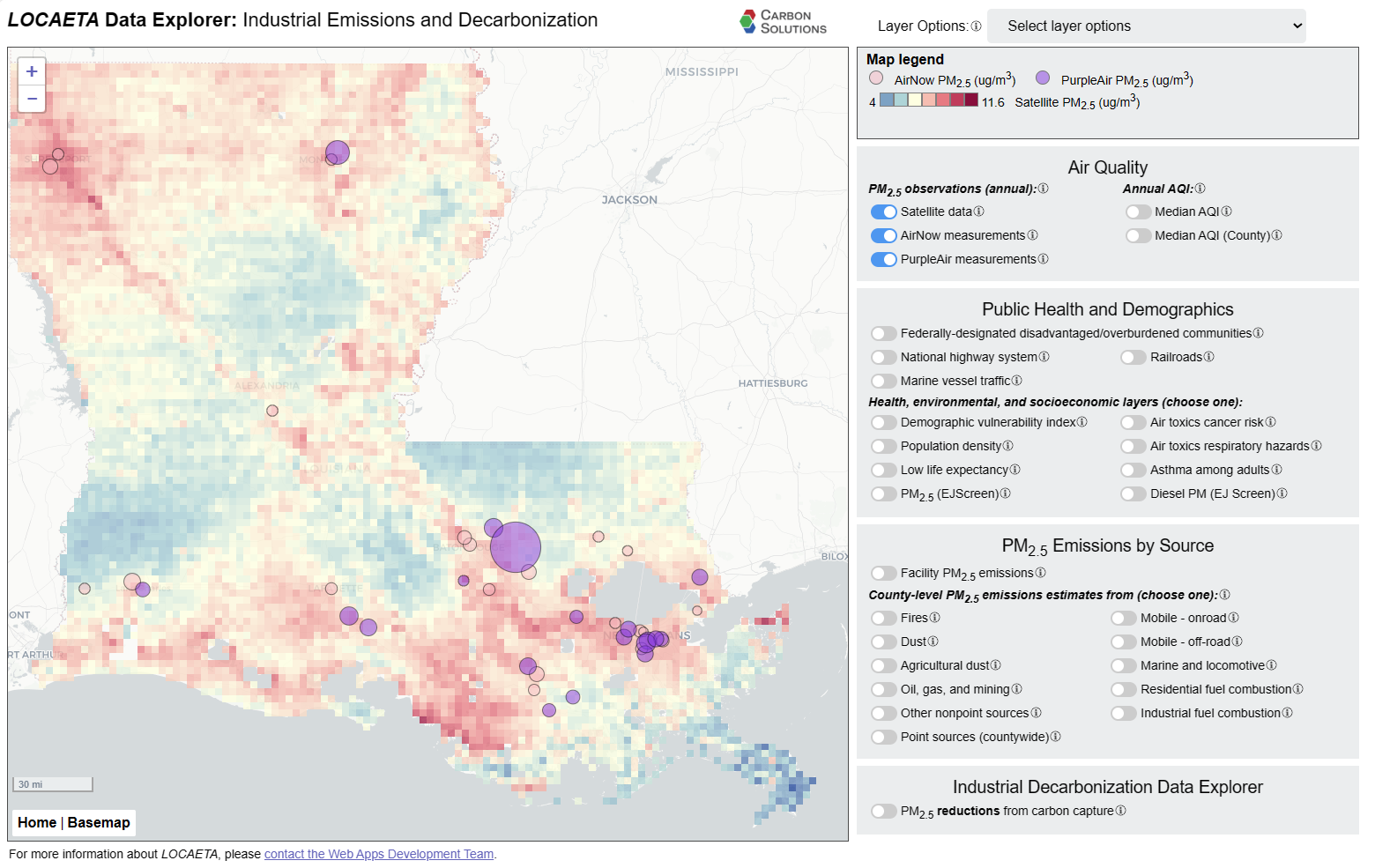
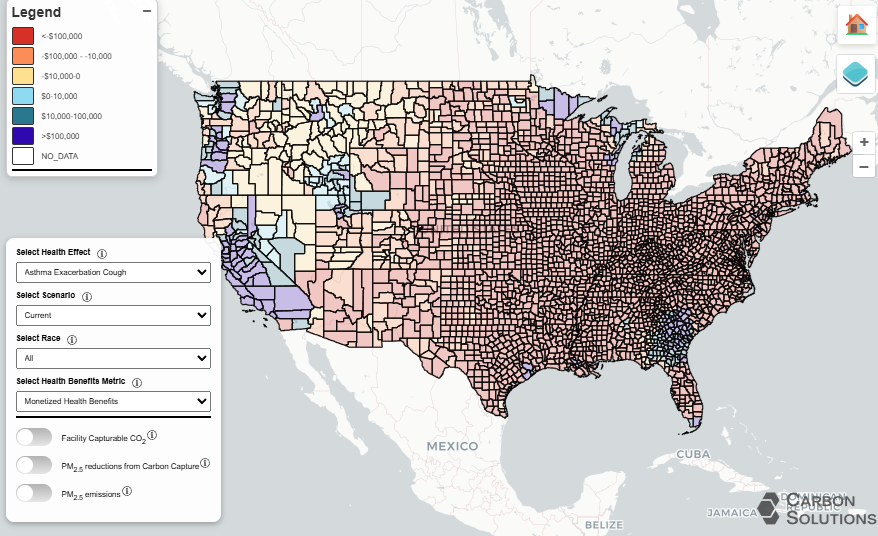
LOCAETA is a modeling and analysis platform that includes air dispersion modeling, facility emissions and air quality data, population exposure, and health risk models to assess the public health impacts of emissions. Results and other relevant data layers are displayed in an interactive, easy-to-use Data Explorer web interface.
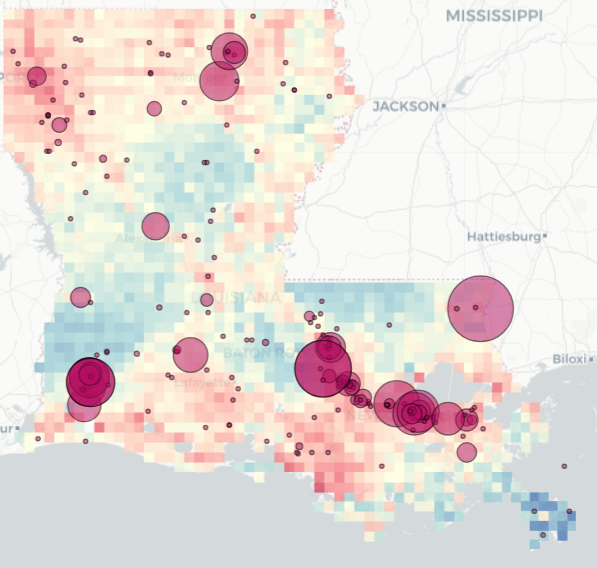
Characterize air quality data

LOCAETA uses a range of data products, such as satellite and in situ air quality data, to assess the impacts to communities from air pollution produced by specific emitting facilities.
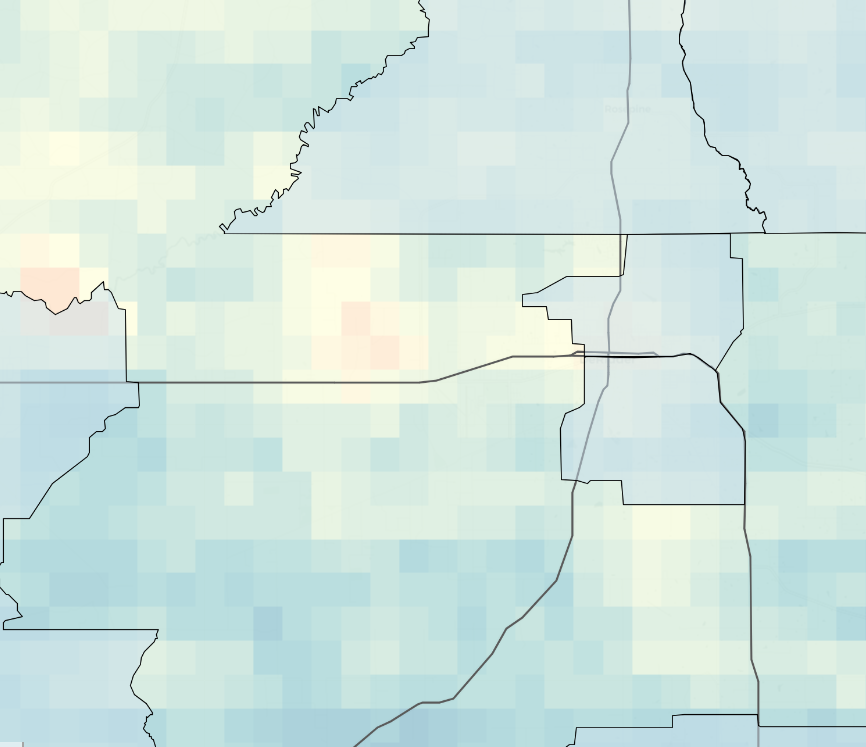
Air dispersion modeling

Using physics-based models, statistical analysis and machine learning, LOCAETA generates results that predict how air pollution from industrial facilities would change under different scenarios involving decarbonization.
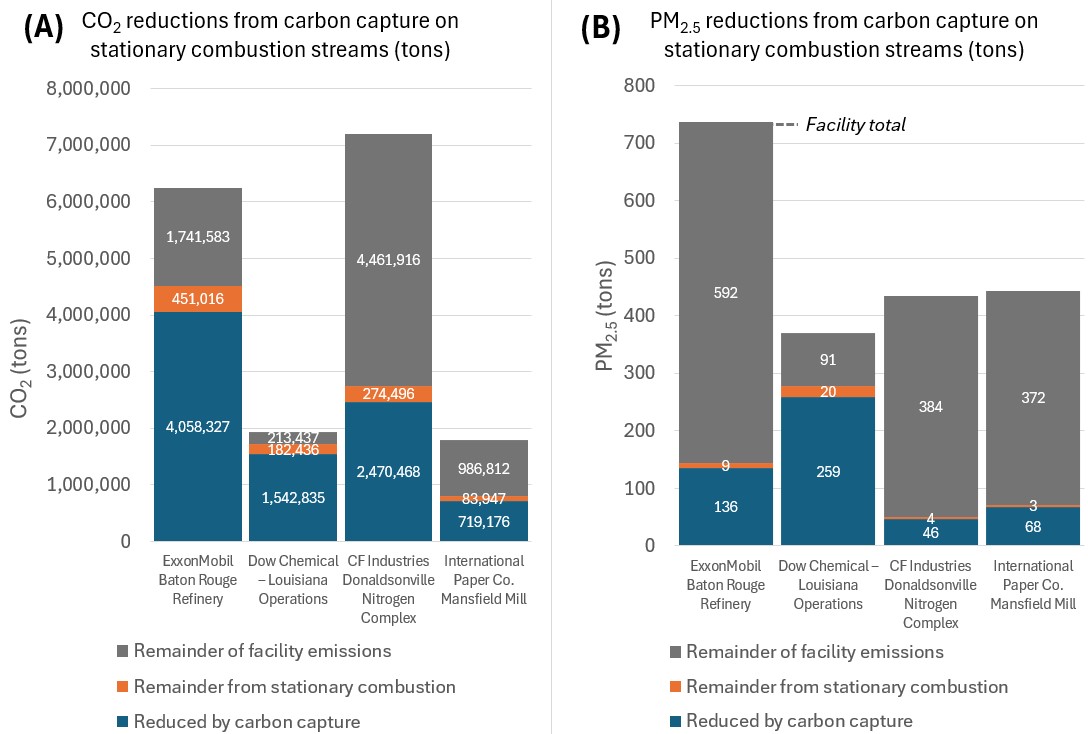
Actionable insights for decision making

Our software integrates air quality data, air dispersion models, and health impact modeling to demonstrate trade-offs and co-benefits of a range of potential technology pathways to decarbonization, such as electrification, carbon capture, hydrogen fuel-switching, and more.

A prototype of the LOCAETA data explorer was developed to study the PM2.5 reductions possible from carbon capture on stationary combustion at industrial facilities in Louisiana

A nationwide, screening-level version of LOCAETA will be released by early 2026 with additional pollutants, decarbonization technologies, and public health benefits results. In the meantime, focused local projects using the platform are underway to support clean energy planning in specific geographic areas. Please contact us if you would like to discuss a local LOCAETA project to evaluate, quantify, and visualize the public health impacts of industrial facility emissions and potential decarbonization co-benefits.

FAQs

Learn more about LOCAETA​ and how it can benefit your organization.

The Local Air Emissions Tracking Atlas (LOCAETA, pronounced “low-kay-shuh”) is an air quality analysis tool designed to help communities across the U.S. understand the long-term air quality and public health impacts of industrial facility emissions. It also estimates potential improvements to air quality and public health resulting from decarbonization efforts.
LOCAETA integrates emissions data from industrial facilities, satellite and in situ measurements of pollutant concentrations, expert insights on decarbonization technologies and literature estimates of emissions impacts, and new atmospheric modeling to model the spread of emissions and their impact on communities.
LOCAETA supports regulators, governmental agencies, community groups, NGOs, industry professionals, and ESG investing businesses in understanding the air quality impacts and co-benefits of various decarbonization options for industrial facilities, such as carbon capture, electrification, and fuel-switching. By focusing on community-level air quality and public health impacts, as well as the economic advantages of improved air quality, LOCAETA serves as a valuable tool for decision support and community engagement. It enables users to evaluate the relative air quality impacts of different options and effectively quantify and communicate the co-benefits of specific decarbonization approaches.
Currently, the LOCAETA Data Explorer Prototype considers PM2.5 in Louisiana. This will be expanded to include other hazardous air pollutants, criteria air pollutants, and volatile organic compounds. Local versions of LOCAETA may cover pollutants of interest to specific communities based on facility emissions in their neighborhoods.
LOCAETA looks at the composition of the community to understand where there may be communities with higher populations of residents who would be particularly vulnerable to poor air quality, and for whom potential improvements to local air quality would have outsized benefit from a public health perspective.

Our Team

Our LOCAETA Specialists

Erin Middleton

Erin Middleton

Research Scientist

Erin is a research scientist with a background in geology, geography, demography, education, and evaluation.

She works on projects that integrate qualitative and quantitative data analysis.

Caleb Geissler

Research Engineer

Caleb is a research engineer working on simulating carbon dioxide removal and industrial decarbonization systems at Carbon Solutions LLC.

During his PhD, Caleb developed optimization models to study bioenergy systems with carbon capture and storage at local and national scales, industrial electrification, and applied optimization techniques to designing a cropland to balance profit and environmental objectives.

Kat Sale

Principal Life Cycle Assessment Engineer

Kat is a chemical engineer who focuses on life cycle analysis and techno-economic assessment.

She supports projects by better characterizing point-source emissions and direct-air carbon capture technology.

Information Hub

Our LOCAETA Projects

Learn more about the LOCAETA projects we have completed.
Client testimonials

Carbon Solutions has been instrumental in the development of our sequestration project in Wyoming over the last 2.5 years. They continue to deliver a work product that exceeds industry standards. I value our relationship and will ensure Carbon Solutions is embedded in the development of our project as we grow.

Jess Foshe

President & CEO