
LOCAETA: Air quality and co-benefits from CCUS and Electrification
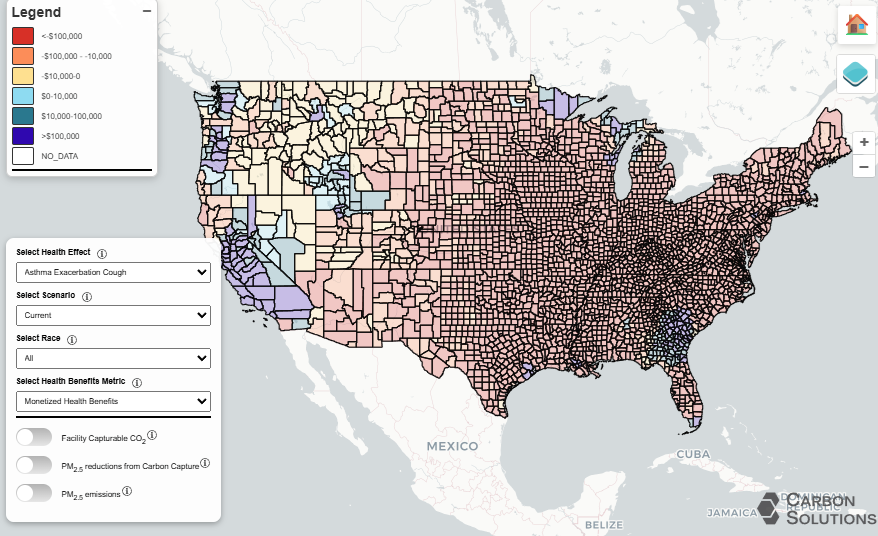
This page highlights the use of the LOCAETA tool, which estimates co-pollutant reductions and health impacts of decarbonization technologies.
Webinar: Get (HEAT) Pumped- A Comparison of Technologies for Renewable Heat

The Local Air Emissions Tracking Atlas (LOCAETA) project is a platform and analysis approach that allows us to understand the impacts of industrial facilities on surrounding communities. In particular, for changes in industrial emissions due to various interventions, we estimate the changes in air pollutant concentrations and the resulting public health impacts, and display them in an interactive Explorer for ease of communication and use. These scenarios may be co-benefits to industrial facility decarbonization, or other interventions such as landfill enclosed flares, the establishment of data centers, or other changes that may affect neighboring communities.
In this recorded webinar, Carbon Solutions and the MIT Concrete Sustainability Hub explore how to reduce investment barriers to large-scale carbon capture, transport, and storage (CCUS) around industrial carbon hubs.
Speakers: Marcos Miranda – Carbon Solutions, Elizabeth Moore – Massachusetts Institute of Technology (MIT)
This session focuses on the concrete and cement sector, using spatial-economic modeling to identify cost-effective strategies for infrastructure buildout and deployment at scale.
Industrial decarbonization with CCS
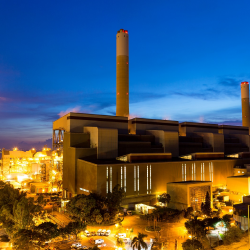
The study presents potential carbon capture and storage scenarios to inform the understanding of infrastructure requirements for decarbonizing the industrial sector in the United States.
National Assessment of NGCC and Coal-Fired Power Plants with CO₂ Capture and Storage
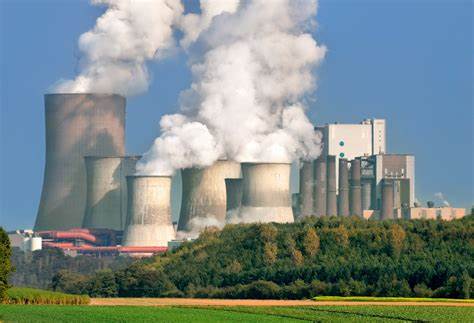
Carbon Solutions, in collaboration with the Clean Air Task Force (CATF), conducted a comprehensive assessment of the potential deployment of carbon capture and storage (CCS) technologies across the U.S. natural gas combined cycle (NGCC) and coal-fired power plant fleets. Utilizing the proprietary SimCCSᴾᴿᴼ toolset, the project evaluated the feasibility, economic viability, and infrastructure needs for integrating CCS into the existing power generation network. The study focused on identifying optimal pathways for CCS implementation, balancing capture costs, transportation logistics, and storage availability in saline aquifers. By modeling multiple deployment scenarios, the research provided insights into the role of CCS in reducing emissions from existing power plants and supporting the broader decarbonization goals of the energy sector.
NWF Carbon Map: Wyoming Carbon Management and Wildlife Decision-Support Tool
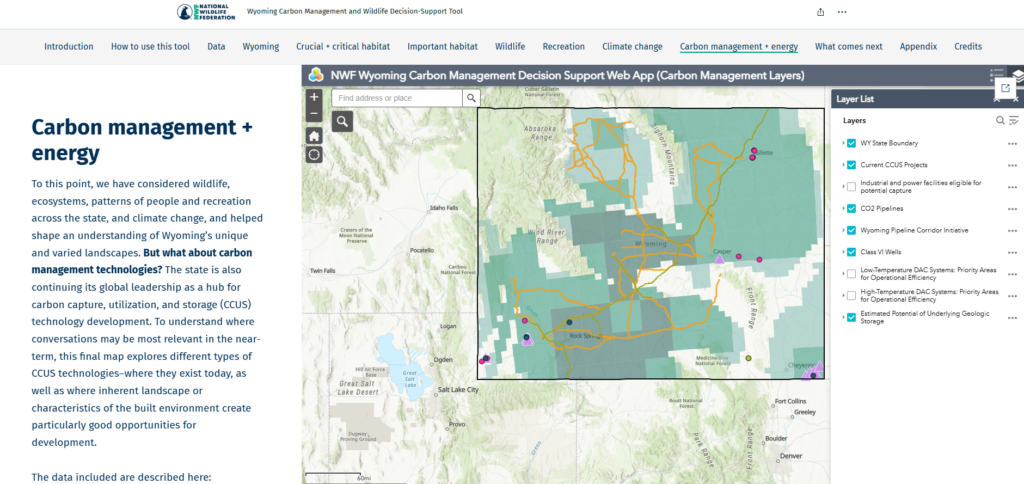
The National Wildlife Federation (NWF) partnered with Carbon Solutions to develop the Wyoming Carbon Management and Wildlife Decision-Support Tool, integrating carbon management infrastructure with key environmental and wildlife conservation data.
Cloud-Based High-Performance Computing Decision-Making Software

Reaction Engineering International (REI) and the project team are developing a next-generation, cloud-based decision-making software platform that integrates a wide variety of tools into a single, easy-to-use application with a web-based user interface, with capabilities to evaluate and optimize project planning, costs, risks, and uncertainty.
Wabash CarbonSAFE
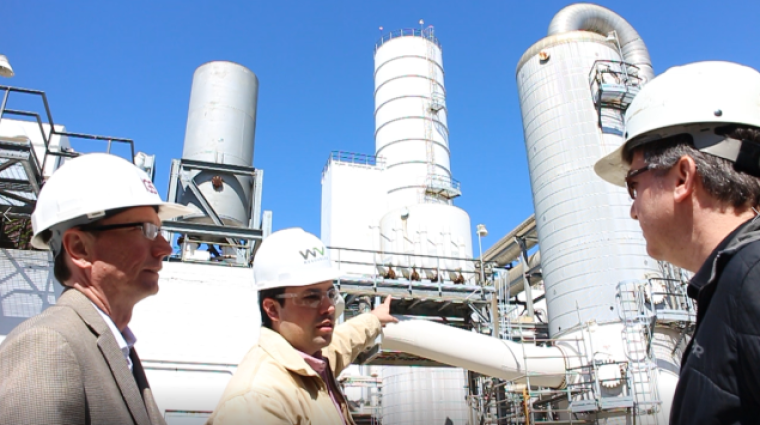
Wabash CarbonSAFE is one of the first six projects awarded for Phase II work by the U.S. Department of Energy. The project will establish the feasibility of developing a storage complex associated with the Wabash Valley Resources facility near Terre Haute, Indiana. The former Wabash integrated gasification combined cycle power plant at this location is being repurposed for hydrogen or ammonia production and will serve as the primary source of CO2 for the storage complex.
CarbonSAFE Illinois Storage Corridor

CarbonSAFE projects aim to address R&D knowledge gaps and develop the technologies needed to deploy commercial scale CO2 storage (50+ million metric tons).
SimWIND: Software to Support Wind Siting and Environmental Challenges
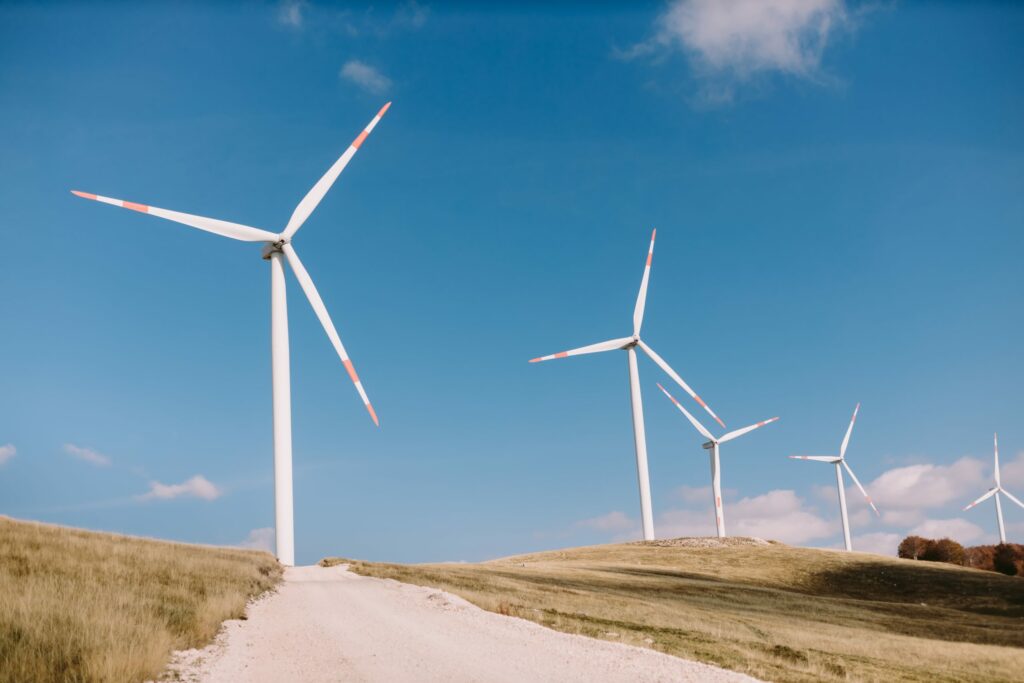
This project is developing a new software package, called SimWIND, to support wind energy planning by balancing (1) natural resource and societal impacts and other environmental factors, (2) wind power generation potential (i.e., wind-generated electricity at any given site), (3) transmission planning and routing, and (4) integration into the electric grid.
PSHAUM: Innovative Energy Storage Technology
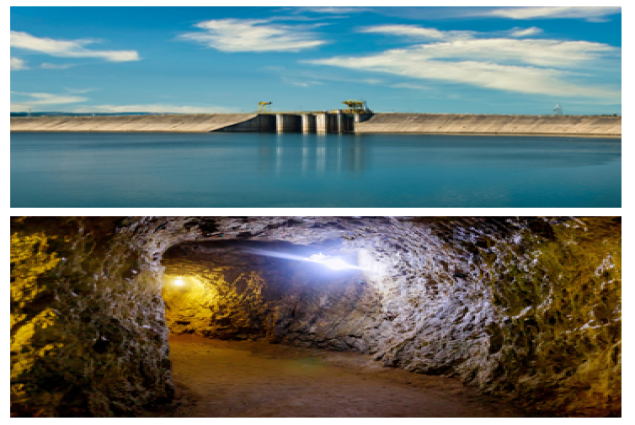
Despite exponential growth in utility-scale battery storage in recent years to approximately 1 gigawatt operating capacity, pumped-storage hydropower (PSH) still accounts for over 90% of all utility-scale storage in the U.S. and globally. PSH is a proven, cost-effective technology that is poised for massive expansion throughout the U.S. if the “ΔH challenge” can be solved.