Webinar: Get (HEAT) Pumped- A Comparison of Technologies for Renewable Heat

The Local Air Emissions Tracking Atlas (LOCAETA) project is a platform and analysis approach that allows us to understand the impacts of industrial facilities on surrounding communities. In particular, for changes in industrial emissions due to various interventions, we estimate the changes in air pollutant concentrations and the resulting public health impacts, and display them in an interactive Explorer for ease of communication and use. These scenarios may be co-benefits to industrial facility decarbonization, or other interventions such as landfill enclosed flares, the establishment of data centers, or other changes that may affect neighboring communities.
In this recorded webinar, Carbon Solutions and the MIT Concrete Sustainability Hub explore how to reduce investment barriers to large-scale carbon capture, transport, and storage (CCUS) around industrial carbon hubs.
Speakers: Marcos Miranda – Carbon Solutions, Elizabeth Moore – Massachusetts Institute of Technology (MIT)
This session focuses on the concrete and cement sector, using spatial-economic modeling to identify cost-effective strategies for infrastructure buildout and deployment at scale.
Carbon Solutions: Services, Software, and Projects
Carbon Solutions: Services, Software, and Projects Carbon Solutions combines research, services, and software to advance low-carbon energy solutions. This presentation offers an overview of our company, highlighting services, proprietary tools, example projects, and capabilities that define who we are. Explore the full presentation below to see how our expertise supports the transition to a low-carbon […]
Webinar: How to Net Zero America Nationwide Cost and Capacity Estimates for Geologic CO₂ Storage
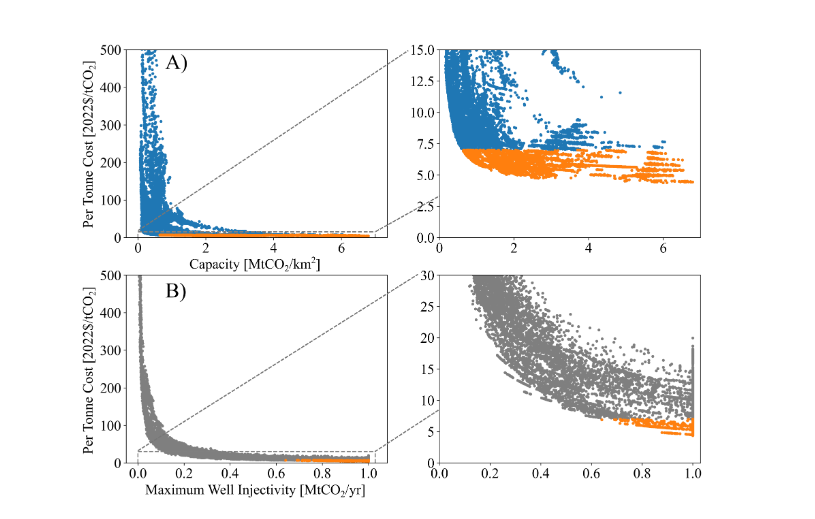
Report: How to Net-Zero America: Nationwide Cost and Capacity Estimates for Geologic CO₂ Storage
Read the full report here.
Considering the Potential for Sedimentary Basin Geothermal Power Generation When Screening for Prospective Geologic CO₂ Storage Sites

Read the full report here.
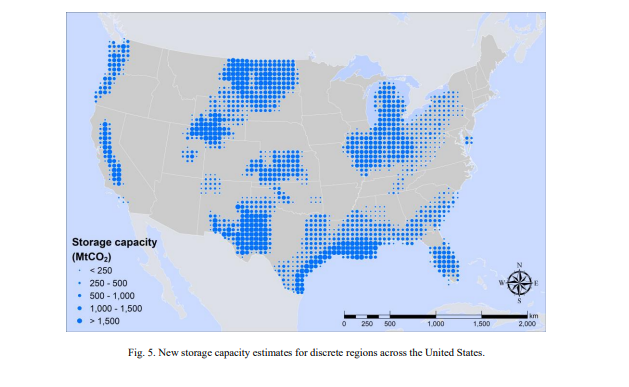
Report: Beam Me Up SCO₂Tᴾᴿᴼ: A Comparison to the FE/NETL CO₂ Saline Storage Cost Model and Updates on Tool Development
Read the full report here.
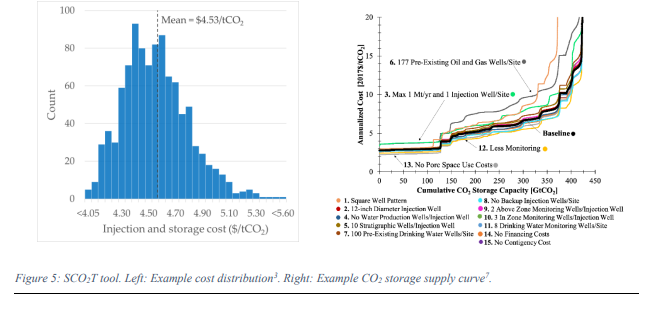
Report: Great SCO₂T! Rapid Tool for Geologic Carbon Sequestration Science, Engineering, and Economics
Read the full report here.
Wabash CarbonSAFE
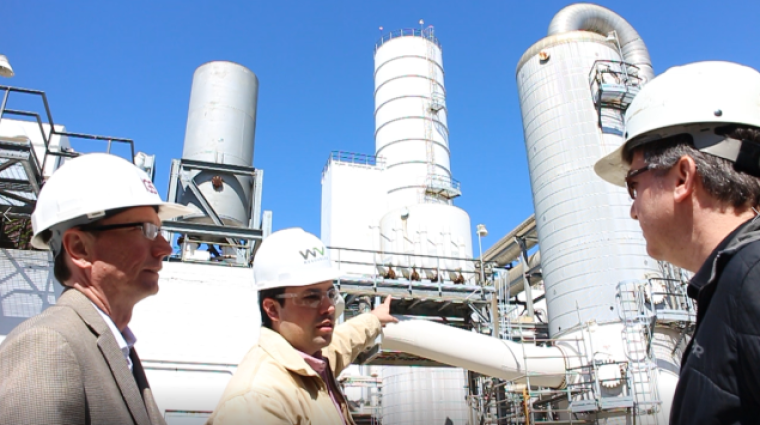
Wabash CarbonSAFE is one of the first six projects awarded for Phase II work by the U.S. Department of Energy. The project will establish the feasibility of developing a storage complex associated with the Wabash Valley Resources facility near Terre Haute, Indiana. The former Wabash integrated gasification combined cycle power plant at this location is being repurposed for hydrogen or ammonia production and will serve as the primary source of CO2 for the storage complex.
MRCI: Midwest Regional Carbon Initiative
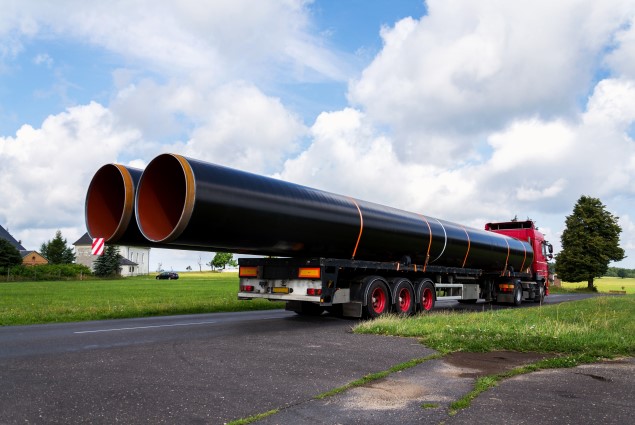
The Midwest Regional Carbon Initiative (MRCI) is a broad coalition of partners dedicated to accelerating the deployment of CCS technologies in the Midwest and Northeastern United States.
Design Development and System Integration Design Study for an Advanced Pressurized Fluidized Bed Combustion Power Plant
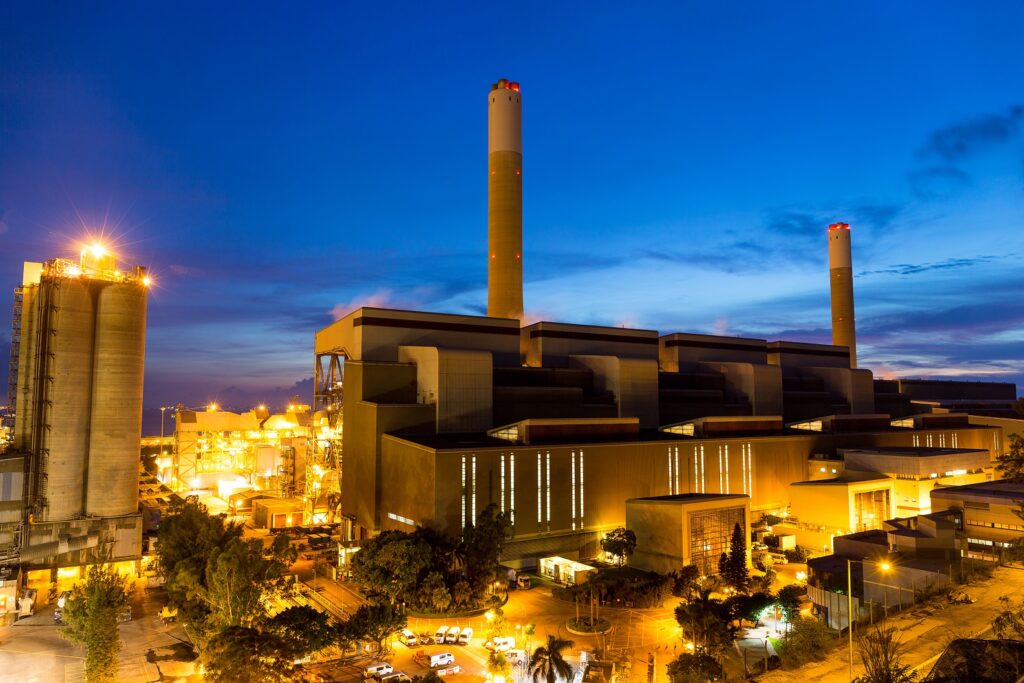
CONSOL Energy is designing an advanced carbon-negative power plant that runs on waste coal and biomass, with the potential to be demonstrated in the next 5–10 years and achieve market penetration by 2030. CONSOL previously completed a conceptual design and pre-FEED study for a ~300 MWnet advanced power plant using pressurized fluidized bed combustion (PFBC) technology. This project will advance the end-to-end development of the advanced PFBC technology, including plant design, host site development, environmental considerations, CO2 disposition strategy, energy equity, techno-economic analysis, and lifecycle assesment. The project will provide a roadmap for decision-makers, investors, engineers, construction contractors, and other stakeholders to build this first-of-a-kind powerplant.